
Stained Concrete vs Epoxy: Which Floor Fits Your Houston Slab?
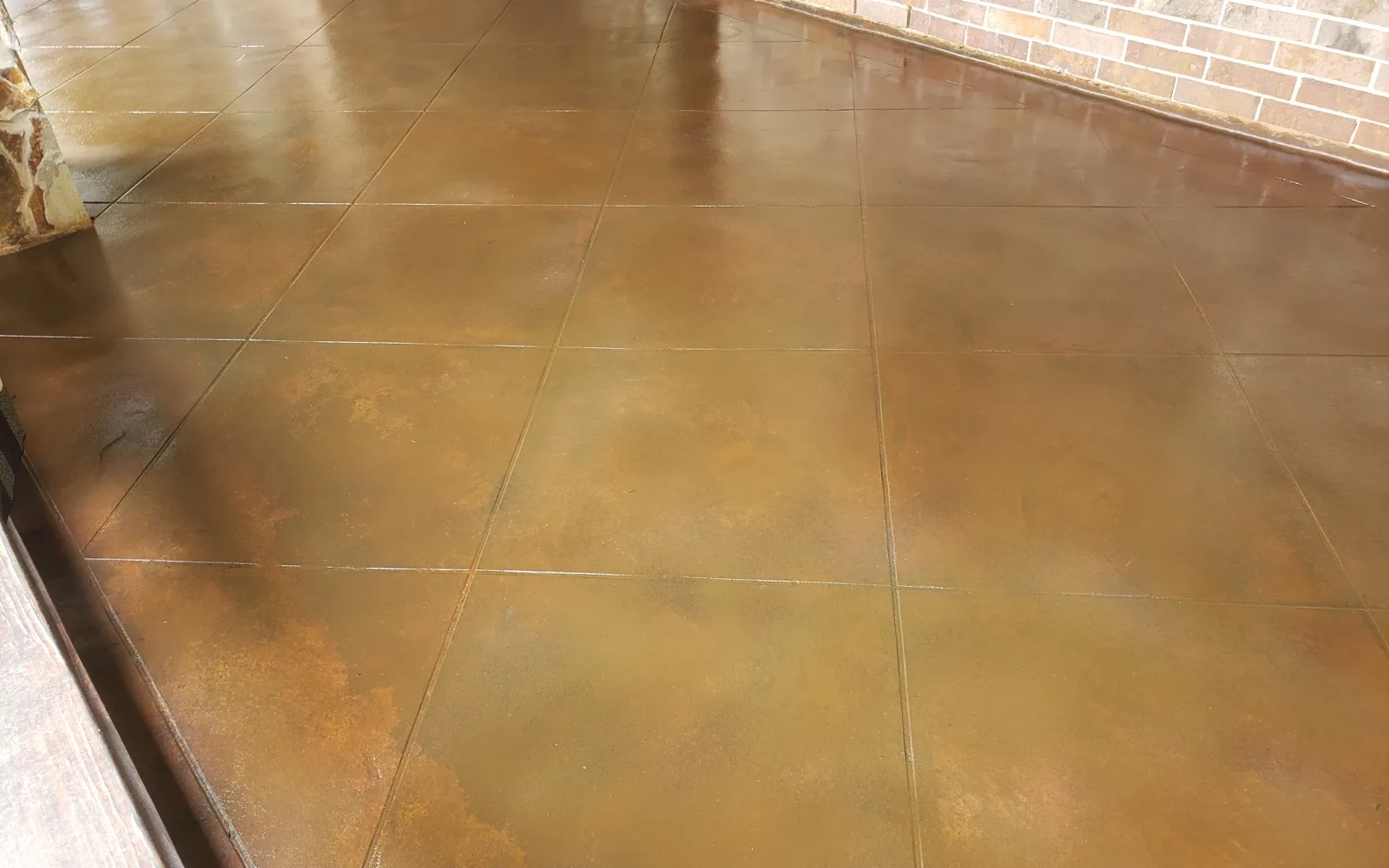
Stained concrete colors the slab you already have. An acid stain or dye soaks into the concrete, and a clear sealer on top takes the wear. The color is translucent and mottled, so the slab’s cracks and patches still show. That sealer is the only wear layer, and it gets a fresh coat every two to four years.
An epoxy coating builds a new surface on top of the concrete. It can be an opaque solid color, a flake blend or a metallic pour, and it covers the slab underneath. Its thick wear layer stands up to hot tires and oil. So the room decides: garages get epoxy, driveways get stain, and interiors, porches and patios can go either way.
We install both, so this guide lays them side by side. Every cost figure below is a national market number, not our price list.
What is the difference between stained concrete and epoxy?
An acid stain is an acid-based solution with metallic salts that react with the lime in the concrete. That reaction leaves a permanent color with a variegated, marbled look. A concrete dye skips the reaction and carries tiny pigment particles into the surface.
Either way, the color sits in the concrete instead of on top of it. A national garage guide says stain will not peel, chip or flake. The same guide says stain adds no protective layer the way epoxy does. That job falls to the sealer, which we put on to protect stained concrete from wear, moisture and UV damage.
An epoxy coating works from the top. The slab is diamond ground and the cracks and joints are repaired. Then an epoxy base coat goes down, since epoxy bonds to concrete best. A clear topcoat of polyaspartic, polyurea or polyurethane goes over it.
Our stained concrete floors page covers stains, dyes and sealer choices in more detail. The table below puts the two finishes side by side.
How do stained concrete and epoxy compare side by side?
Here is how the two floors compare on a sound slab.
| Stained concrete | Epoxy coating | |
|---|---|---|
| How it bonds | Soaks in and reacts with the concrete | Bonds to ground concrete as a layer on top |
| Look | Translucent and mottled, in natural tones | Solid color, flake, quartz or metallic |
| Hides cracks and patches | No, the slab shows through | Yes; cracks get repaired, and flake hides flaws |
| Wear layer | A thin clear sealer | 10 to 20 mils per coat of 100 percent solids epoxy, plus a topcoat |
| Hot tires and oil | Wears faster in a busy garage; gas and oil break down acrylic sealer | Professional coatings resist tire heat and chemicals |
| Slip when wet | Sealer can get slick; grit can go in it | Gloss gets slippery; flake or grit adds grip |
| Upkeep | Fresh sealer every two to four years | Easy to clean |
| Lifespan | 20 years or more with proper care | 10 to 20 years for pro 100 percent solids epoxy |
| National cost band | Basic acid stain, $2 to $6 per sq ft | Installed epoxy garage floor, $3 to $12 per sq ft |
| Best fit | Driveways, porches, patios and sound interior slabs | Garages, shops and worn or patched slabs |
The slab and the room pick the winner. Stain suits a sound slab where you like the character of the concrete. Epoxy suits a floor that takes abuse, or a slab with flaws to cover.
Which floor fits which room?
Garages: epoxy. A garage floor takes hot tires, oil and heavy traffic. A national garage guide says a stained and sealed floor shows wear faster than a coated one there. It also lacks the impact, chemical and abrasion resistance of epoxy. Our epoxy garage floors are built for hot tire pickup resistance and easy cleaning.
Interior rooms: either. On a sound slab, stain gives a translucent, marbled look that belongs to the concrete. Metallic epoxy floors give a marbled look stain cannot copy, and every floor is one of a kind. Interior epoxy floors also come in solid color, flake and quartz.
Porches and patios: either. Stain and a sealer suit a sound porch or patio, and one past job is a copper stained porch. A coated system with a UV stable topcoat suits a slab that needs covering. Our patio coatings page covers those systems.
Driveways: stain and a sealer. The color is part of the slab, so it will not peel off under tires. The sealer takes the wear. One past job is an onyx stained driveway. Our stained concrete driveways page covers colors and prep.
What do stained concrete and epoxy cost?
National cost guides put basic acid stain designs at $2 to $6 per square foot. Another national cost guide puts a professionally installed epoxy garage floor at $3 to $12 per square foot. So at the simple end, stain starts a little lower. These are market numbers, not our price list.
The sealer is a cost that comes back. A stained floor gets a fresh coat every two to four years. Slab repairs add to both jobs. For the full ranges, see what stained concrete costs in Houston and what an epoxy garage floor costs in Houston.
How do Houston moisture and sun change the choice?
Both jobs start with a moisture check on the slab. Water vapor moves up through concrete, and a concrete industry bulletin ties it to failed coatings. Houston’s hot, humid summers and heavy rain make that check part of every estimate.
Thin sealers over acid stain are generally breathable. A clear film sealer can trap vapor, though. A sealer maker’s note says a clear sealer that turns frosty white has let go, most likely from trapped vapor. Outdoors, the sealer goes on a dry slab in a dry weather window.
Epoxy handles vapor with a primer. A national garage guide says too much vapor makes a coating delaminate from underneath. Where the test calls for it, we lay a moisture vapor barrier primer under the base coat. Our post on why epoxy floors peel in Houston explains the moisture tests.
Sun is the other Houston factor. Standard epoxy ambers in UV light, so a sunny floor gets a UV stable topcoat over the epoxy base. Our epoxy vs polyaspartic vs polyurea guide compares those topcoats. On stained concrete, the sealer takes the UV, and acid stain resists fading better than dye.
Which one should you pick for your slab?
Pick stain when the slab is sound and you like the look of colored concrete. Pick an epoxy coating when the floor takes hot tires and oil, or when the slab has flaws to cover. Either way, the free estimate includes a moisture check.
We have installed floor coatings across Greater Houston since 2008, and we are based in the Memorial area of Houston. Quotes often come back within a day. See how we stain and seal on our stained concrete floors page, or call or text (281) 831-5656.