Garage Floor Paint vs Epoxy: Which One Holds Up in a Houston Garage?
Floor paint is the cheapest way to color a garage floor, and it rolls on in a weekend. It is also the coating most likely to lift under hot tires and wear through in a working garage. A two-part epoxy system is thicker, bonds into the concrete and lasts far longer.
A national cost guide says floor paint lasts one to three years in a garage that sees regular vehicle traffic. Published guides put a professional installation at 10 to 20 years. Paint still makes sense for a light-use garage, a short budget or a rental.
Epoxy One installs floor coating systems. We do not paint floors. This guide lays out both options so you can match the floor to the way you use your garage.
What is the difference between garage floor paint and epoxy?
Garage floor paint comes in two common forms, a water-based latex acrylic paint and a one-part epoxy paint. A national guide says most concrete paints are acrylic-latex formulations that sit on the surface of the concrete.
An epoxy coating starts as two parts, a resin and a hardener. Once mixed, they cure by chemical reaction. A national guide says 100 percent solids epoxy builds the thickest film in a single coat.
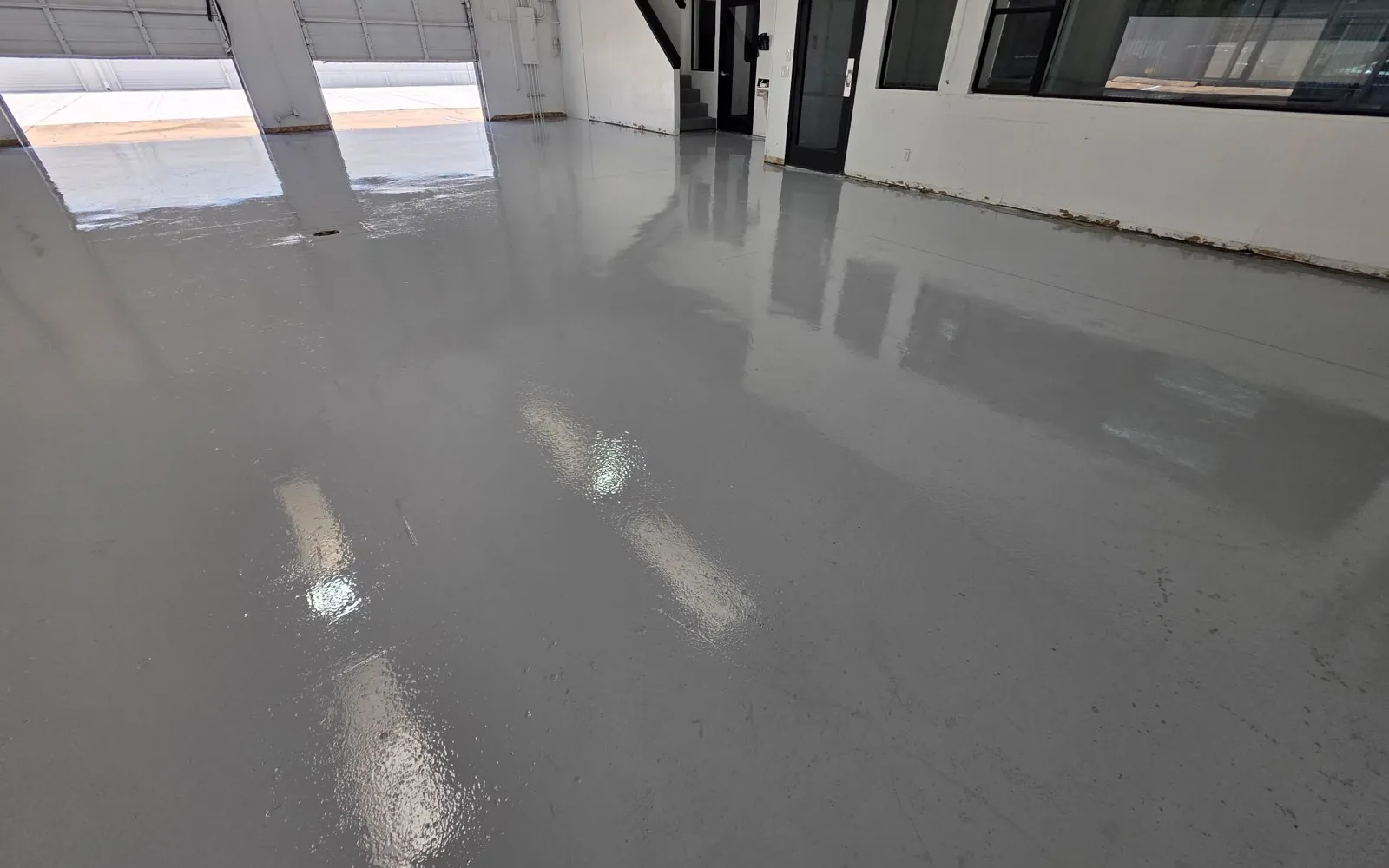
Our epoxy garage floors start with a 100 percent solids epoxy base on a diamond-ground slab. A clear topcoat of polyaspartic, polyurea or polyurethane goes over it. Most garages are a two-day job.
Is epoxy paint the same as an epoxy coating?
No. A concrete industry guide describes one-part epoxy paint as basically a latex acrylic paint with a small amount of epoxy resin added. It comes from one can with no hardener to mix, and it rolls on like any floor paint.
It adheres better than plain latex floor paint, and the same guide expects it to perform for at least 3 to 4 years on a properly prepared slab. It is still a paint film on top of the concrete. A true epoxy coating is the two-part system above. If a label says epoxy, check whether the product is one part or two.
How do floor paint and epoxy compare on cost and lifespan?
The costs below come from a national cost guide, and the lifespans are published ranges.
| Option | Published cost | Published lifespan |
|---|---|---|
| Floor paint, hired out | $1 to $3 per sq ft | 1 to 3 years |
| Floor paint, DIY | $80 to $200 for a 400 sq ft garage | 1 to 3 years |
| Water-based DIY epoxy kit | $0.50 to $1.50 per sq ft in materials | 2 to 5 years |
| Professional epoxy system | $3 to $7 per sq ft, up to $12 for metallic | 10 to 20 years |
In Houston, a solid color epoxy garage floor commonly runs about $3.85 to $4.25 per square foot installed. Those are market numbers, not our price list.
Paint wins on day one. The math changes when paint has to be redone every few years. Failed paint also has to come off before a better coating goes on. For garage sizes, finishes and add-ons, see our epoxy garage floor cost guide.
How do adhesion and prep differ between paint and epoxy?
A national guide calls surface preparation the biggest factor in whether an epoxy floor lasts. DIY kits typically rely on acid etching. The guide calls that cheaper but less effective and less consistent.
Diamond grinding is the professional standard, the same guide says. Grinding opens the concrete pores for adhesion and leaves a consistent profile across the floor. Every job we do includes diamond grinding plus crack and joint repair.
Houston slabs need one more step. Most homes here sit on slab-on-grade foundations over expansive Gulf Coast clay. Moisture vapor coming up through the slab is the number one reason coatings fail here. We run a moisture test and lay a vapor barrier primer where the test calls for it.
The guide traces most DIY failures to skipped moisture testing, sealed concrete or a weak etch. Read why epoxy floors peel on Houston slabs for how that failure starts.
What do hot tires and Houston heat do to paint and epoxy?
Hot tire pickup is a defect where cured coating softens and peels away under hot tires. A national guide says it plainly about concrete paint: hot tires cause peeling. Houston summers bring surface temperatures well above 90 degrees F.
Plain epoxy has limits too. The same guide rates epoxy poor to moderate for hot tire resistance and polyaspartic excellent. That is why our garage systems put a clear topcoat over the 100 percent solids epoxy base. The build is made for hot-tire pickup resistance.
What happens when oil, brake fluid or chemicals spill?
Garage floors collect oil drips, brake fluid and cleaners. A national guide says chemical spills cause staining on concrete paint. It describes epoxy as chemical and stain resistant once cured.
The same guide says a coated floor resists stains and is much easier to clean. Spills wipe up from the surface.
Will an open garage door yellow the floor?
It can. A national guide says epoxy yellows under UV exposure, especially in garages with south-facing doors that stay open. A polyaspartic topcoat is UV stable and does not yellow. Our guide to epoxy vs polyaspartic vs polyurea compares the topcoats.
What if paint is already on the floor?
Peeling paint has to come off first. A national guide says failing paint must be fully removed before any higher-grade coating goes on. A new coating laid over a failing one delaminates along with it.
Grinding off an old coating is part of our prep. We take the slab down to bare concrete, then repair the cracks, run the moisture test and coat. The same guide puts diamond grinding to remove an old coating at $1 to $3 per square foot.
When does paint make sense, and when does epoxy?
Paint makes sense for a light-use garage, a short budget or a rental. It is the cheapest option, and it rolls on in a weekend.
Epoxy makes sense in a working garage with daily parking, hot tires, spills and afternoon sun through an open door. It also fits a slab that needs crack repair anyway. Pick the look next. A solid color epoxy floor comes in gloss, satin or flat. A flake epoxy floor hides concrete flaws and adds texture.
Comparing other floors? Tiles get their own guide in garage floor tiles vs epoxy. Stain and polish are covered in stained concrete vs epoxy and polished concrete vs epoxy.
How do you get an epoxy garage floor quote in Houston?
Our garage floor coating page shows the build and the finish options. We have installed floor coatings across Greater Houston since 2008.
Estimates are free and come with a moisture check, and quotes often come back within a day. Call or text (281) 831-5656 to set one up.